
How to choose RPM software: 12 questions for vendors
Compare RPM software with 12 practical questions about onboarding, devices, alerts, AI calls, billing documentation, security and contracts.
Read articlePCL HEALTH INSIGHTS
Guides for US clinics, RPM companies and billing teams.
Compare RPM software with 12 practical questions about onboarding, devices, alerts, AI calls, billing documentation, security and contracts.
Read articlePlan family caregiver involvement in RPM: patient permission, information sharing, access controls, documentation and backup workflows.
Read article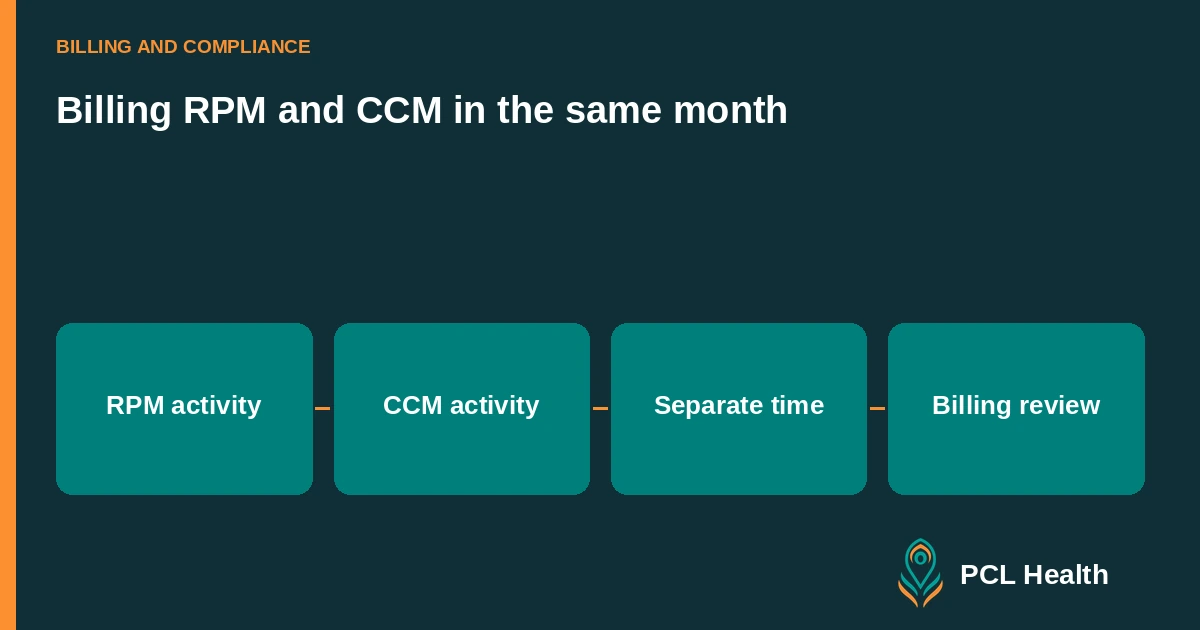
Learn how to review RPM and CCM billing in the same month, separate time and effort, and document the work with current CMS guidance.
Read article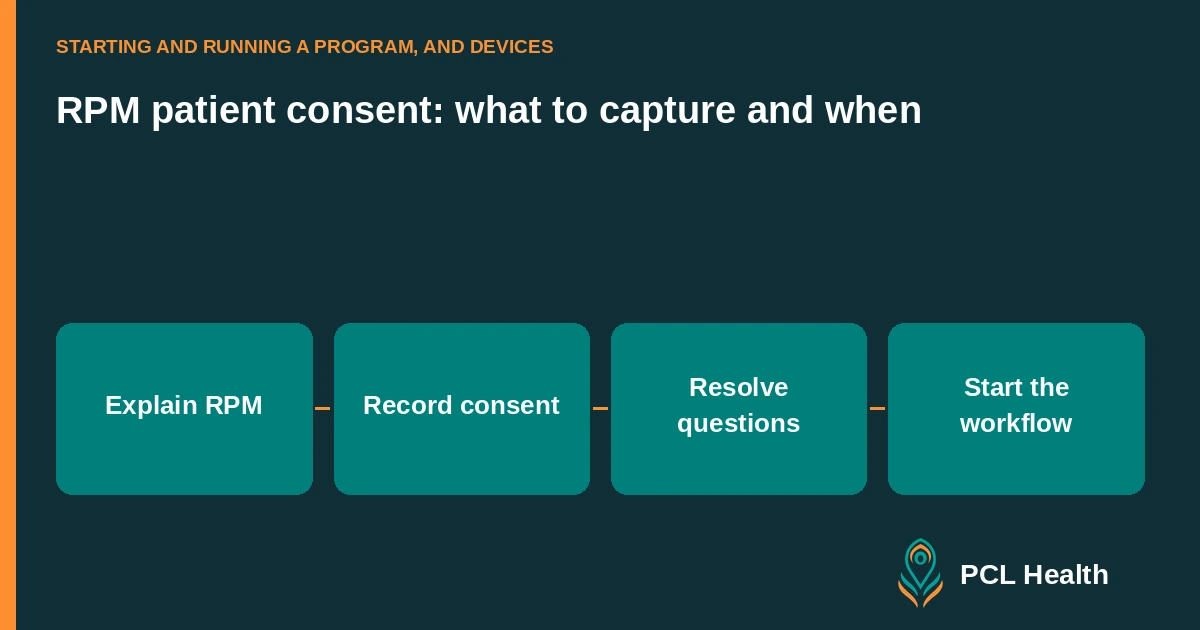
Build an RPM patient consent workflow with clear timing, retrievable records, patient explanations and staff handoffs. Includes CMS guidance.
Read article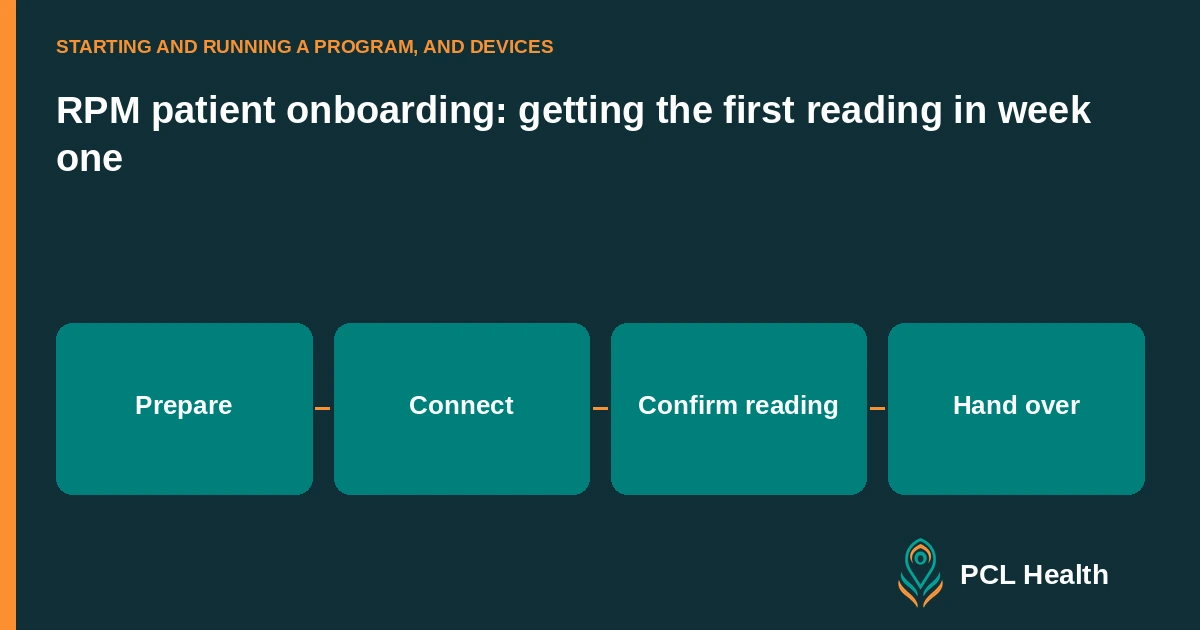
Use a week-one RPM patient onboarding checklist to connect the device, confirm the first reading and assign follow-up. Includes HHS and CMS guidance.
Read article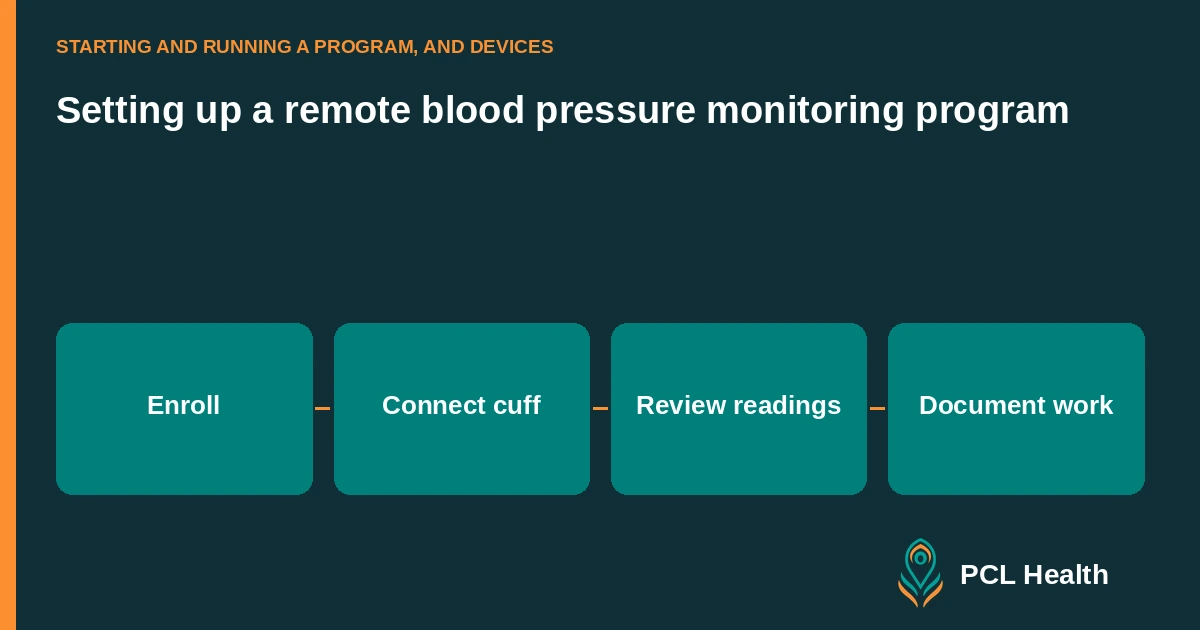
Plan a remote blood pressure monitoring program with cuff setup, reading review, follow-up owners and documentation. Includes HHS and CMS sources.
Read article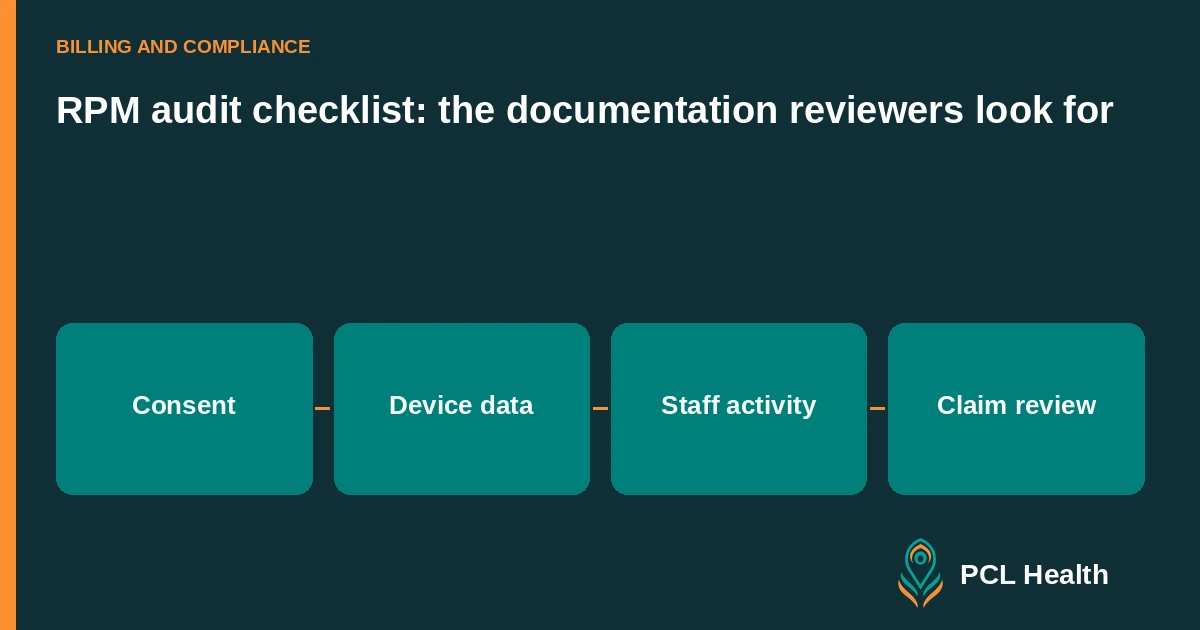
Use an RPM audit checklist to review consent, device data, staff time and interactive communication before billing. Includes CMS and OIG sources.
Read article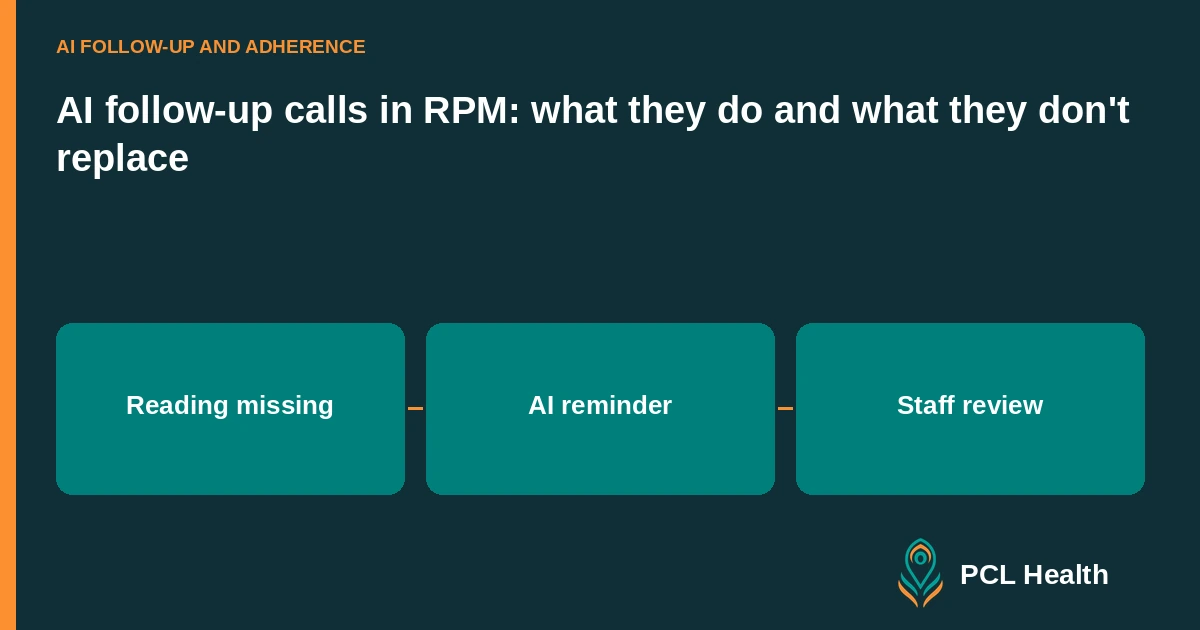
Learn where AI patient follow-up calls fit in RPM, how to review call summaries and why automated calls do not replace clinical communication.
Read article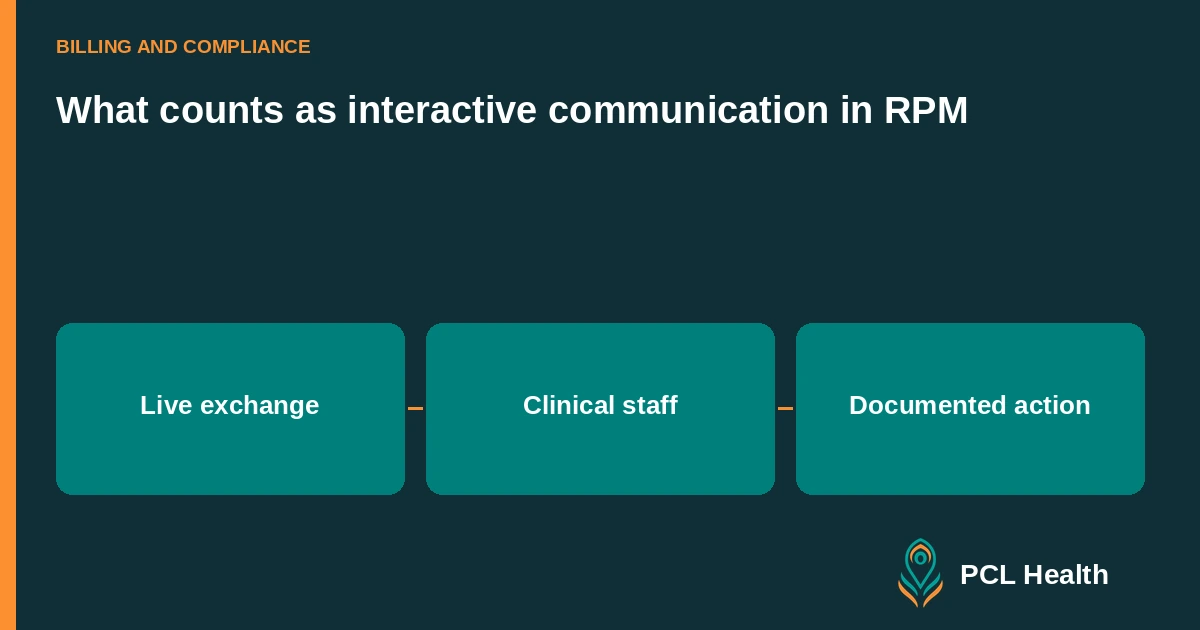
Understand RPM interactive communication, voicemail and AI call boundaries, and how to document live staff conversations for billing review.
Read article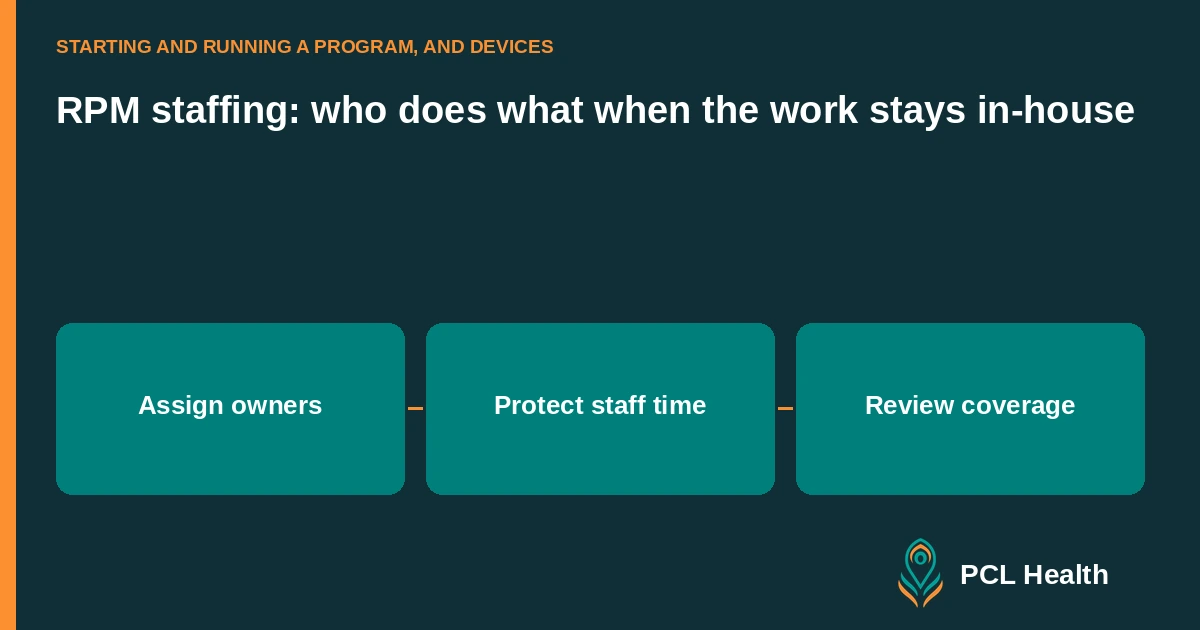
Plan an in-house RPM staffing model with clear responsibilities, coverage, workload review and a contingency plan for the proposed 2027 rules.
Read article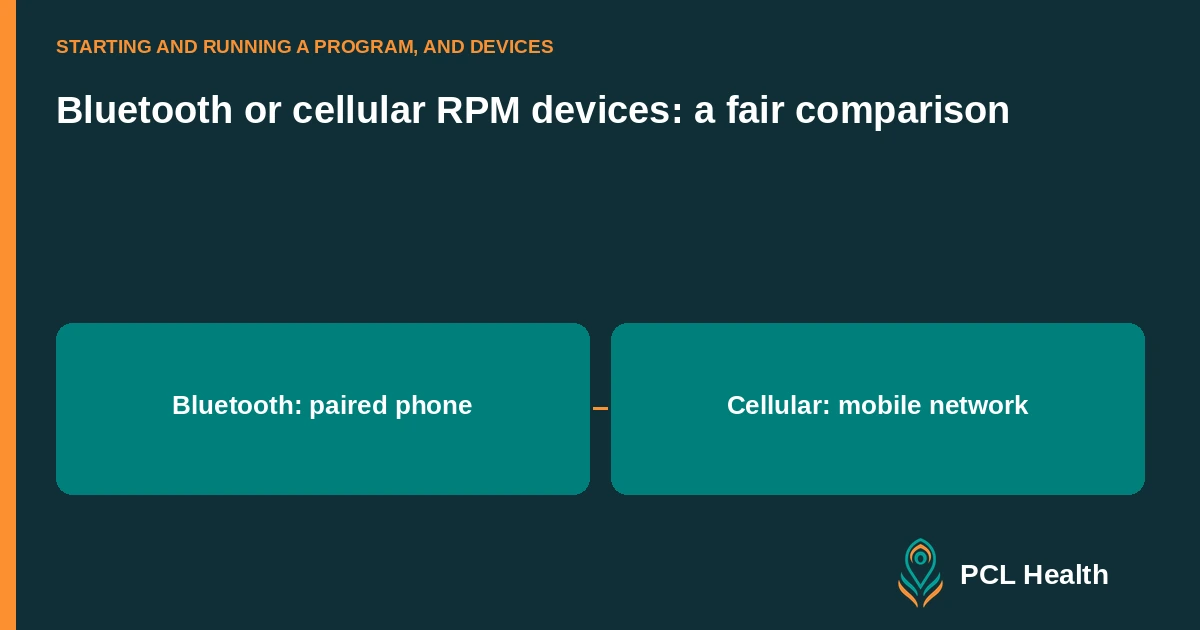
Compare Bluetooth and cellular RPM devices by phone access, connectivity, setup and support. PCL Health uses Bluetooth devices with its patient app.
Read article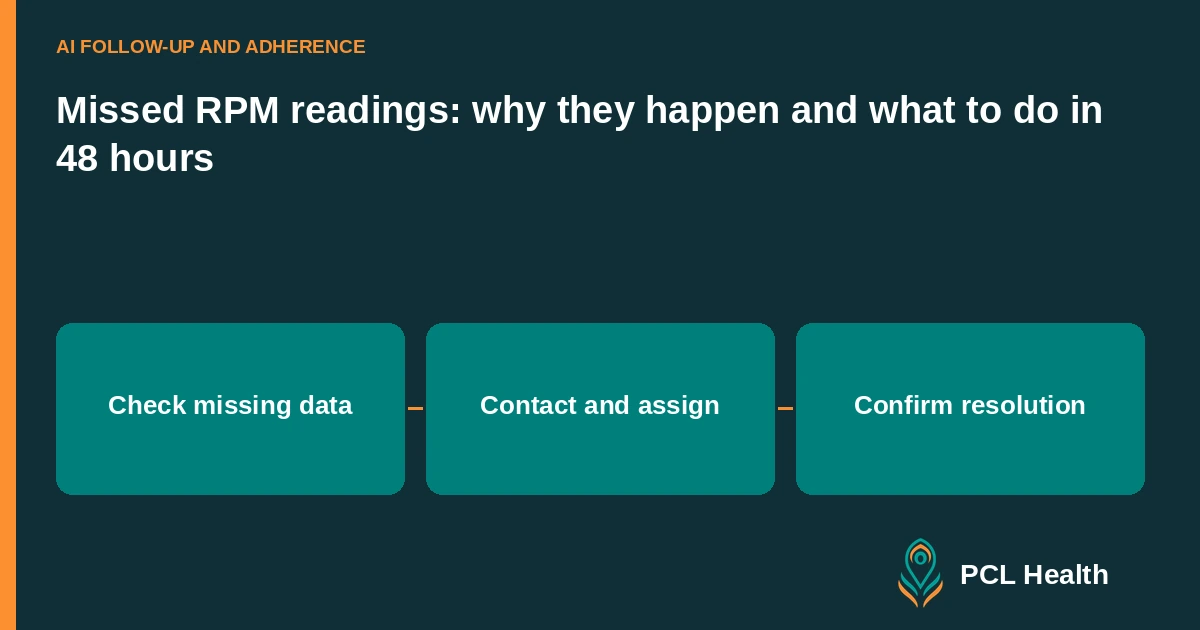
Use a practical 48-hour workflow for missed RPM readings: check transmission, contact the patient, resolve barriers and document the next action.
Read article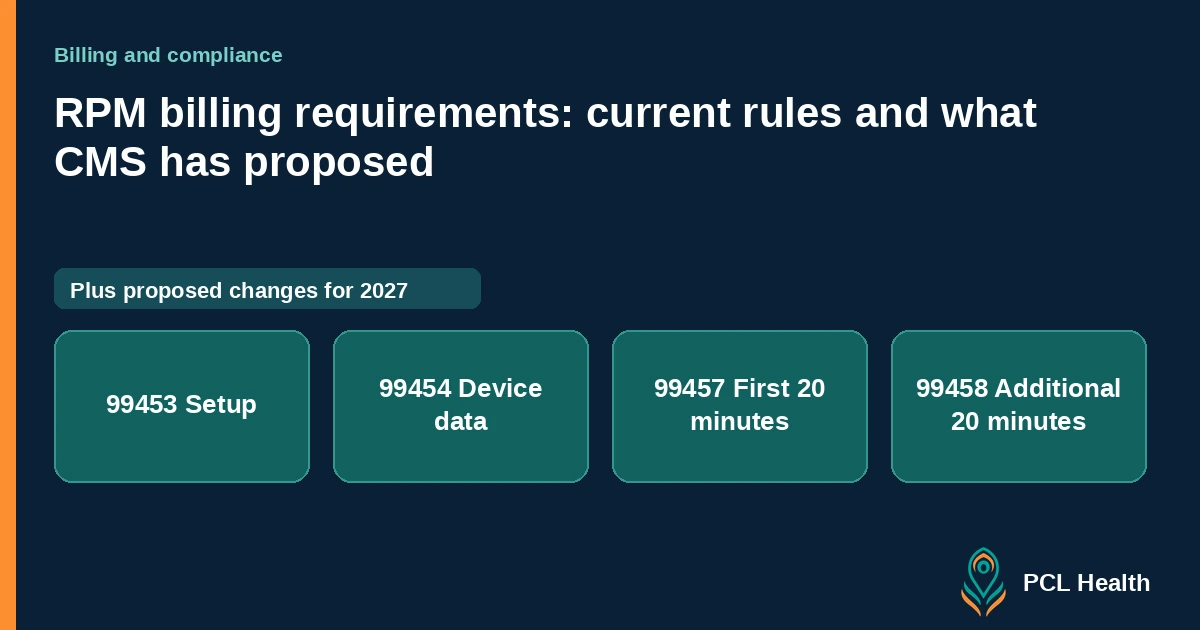
RPM billing requirements depend on the service delivered, the applicable code and the records supporting that service. Practices should apply current requirements and treat the CY 2027 staffing and initiating-visit changes as proposed, not effective policy.
Read article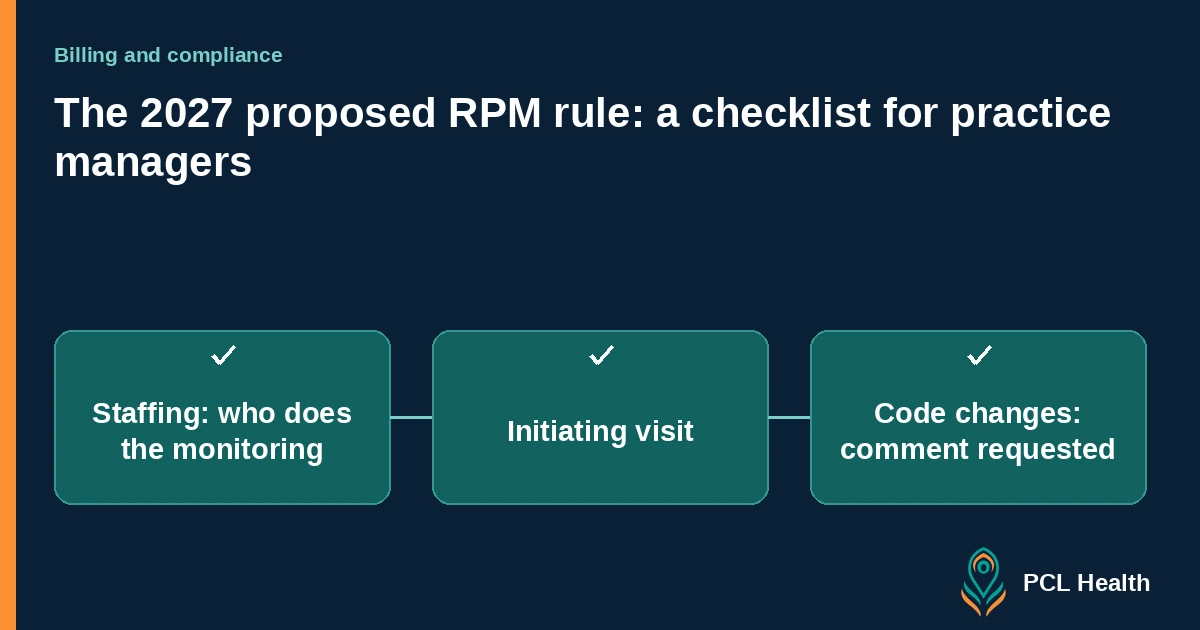
Practice managers should prepare a staffing map, an onboarding review and a final-rule update plan for the proposed 2027 RPM changes. The proposal is not a reason to treat future requirements as effective today.
Read article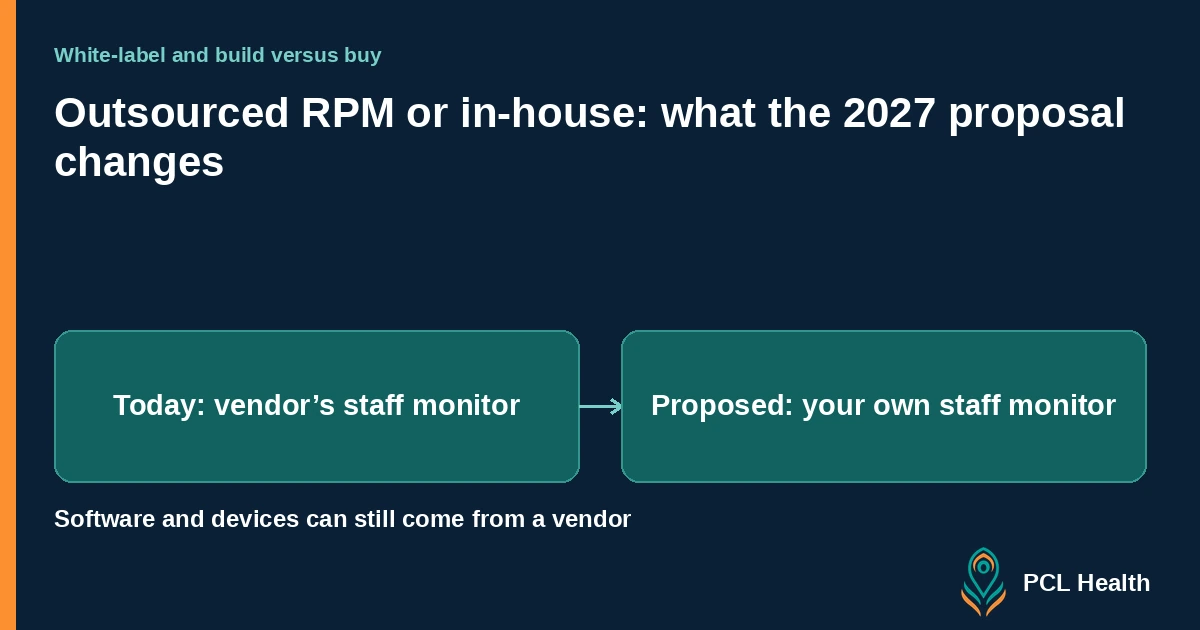
The proposed 2027 RPM policy makes employment arrangements a planning question when comparing outsourced and in-house programs. It does not make a delivery model compliant simply because it is called in-house, or make software licensing the same thing as outsourced clinical services.
Read article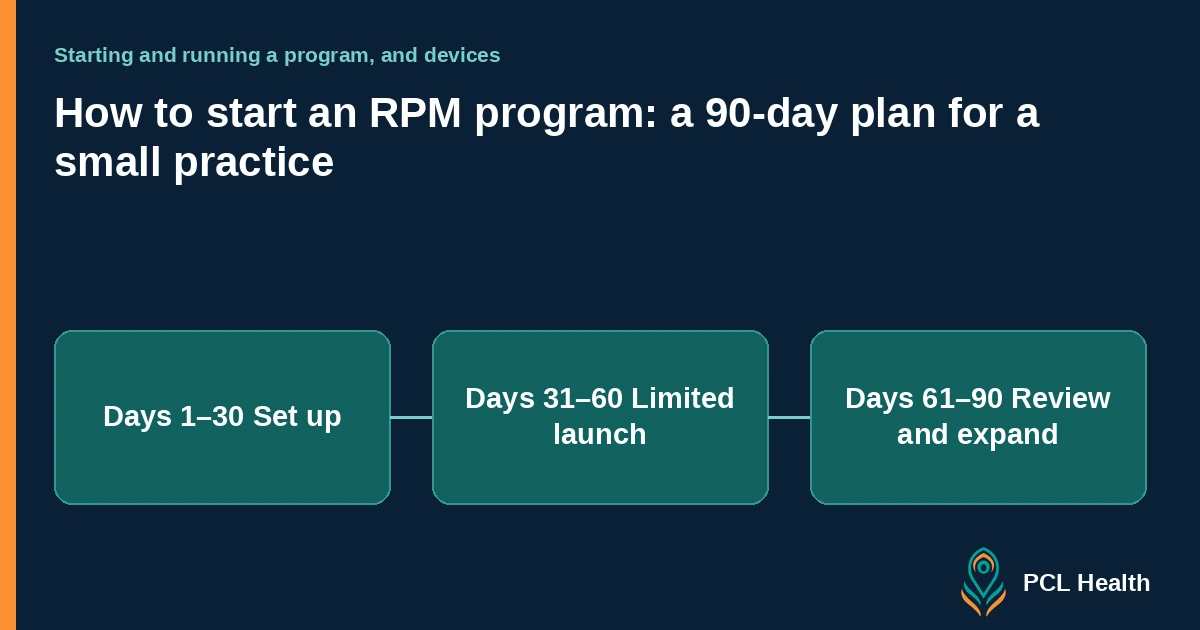
A small practice can start an RPM program by using the first 90 days to define responsibilities, test onboarding and review its records before expanding. Set a decision gate at the end of each stage, with an owner for every unfinished task. Your clinical lead should approve patient-selection criteria and clinical procedures before enrollment starts.
Read article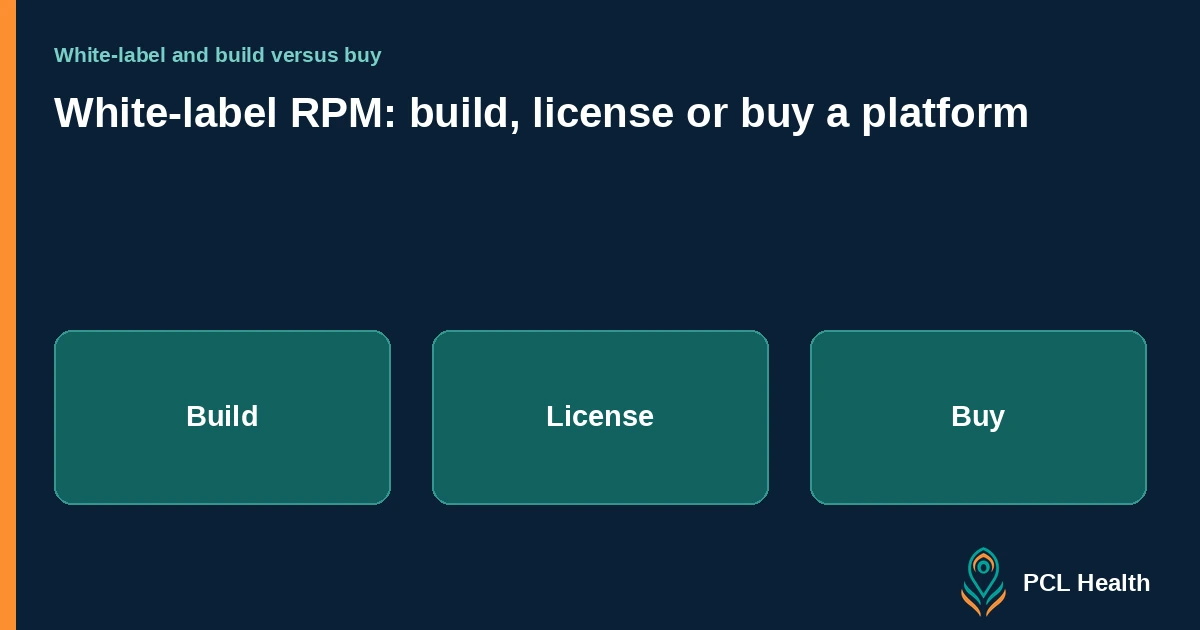
White-label RPM buyers should compare building, licensing and acquisition by the rights, responsibilities and operating work each option creates. Choose a model after testing the patient-to-clinician workflow and reviewing the contract scope. A branded interface alone does not answer questions about clinical staffing, data access or ongoing platform maintenance.
Read article